

BY TREVOR POTTER
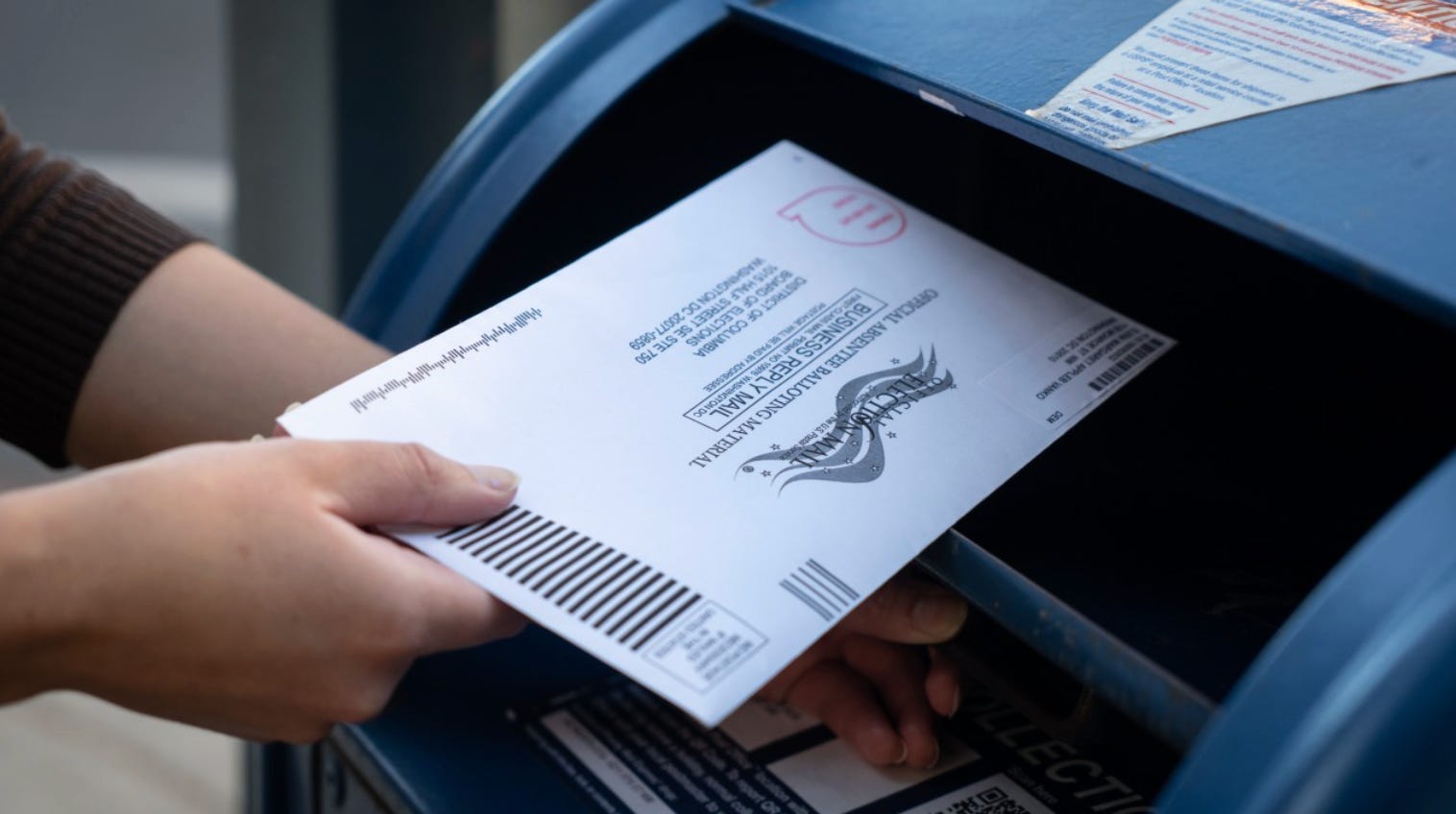
During President Donald Trump’s second term in office, his administration has consistently sought to unconstitutionally extend executive branch power in ways that dictate who can vote in our elections and how elections are administered. The president’s latest bid for control over our elections has produced yet another illegal executive order. This time, the main target is one the president is fond of blaming for electoral results he does not like: voting by mail.
The executive order was signed on March 31. Less than 48 hours later, Campaign Legal Center, alongside Democracy Defenders Fund, filed a lawsuit to block it on behalf of the League of United Latin American Citizens, Secure Families Initiative and Arizona Students’ Association. There’s a very simple reason why we were able to take legal action so quickly — it is based on the same faulty grounds as last year’s executive order on elections.
We challenged that order in court, because it illegally claimed a role for the executive branch in our elections where none exists in the Constitution or current law. Multiple federal courts have blocked the first executive order, and we fully expect the same to happen with this one.
So, what does this new order purport to do? In short, it seeks to impose a series of new requirements for mail-in voting; create a national federal database of “verified” eligible voters based on faulty information; and restrict the ability of the U.S. Postal Service (USPS) to send mail-in ballots to voters not on that list. It also threatens to punish states that fail to comply with the order by withholding federal funding and prosecuting state and local election officials for failure to comply.
Implementing this executive order would have clear ramifications for voters and our democracy. States would face immense pressure to use inaccurate information to administer voting by mail — improperly disenfranchising voters in the process — and USPS could become a tool for denying untold numbers of Americans access to a safe and reliable method of voting.
But the Constitution allocates the power to run our elections only to the states and gives Congress the backup power to pass laws regulating the “time, place and manner” of federal elections. There is no role in the Constitution for the president to overrule the states or Congress concerning election procedures.
On occasion, Congress has used its authority to provide specific federal agencies and departments with limited roles in elections. Examples include the Federal Election Commission (created in 1974), which enforces campaign finance laws, and the Election Assistance Commission (2002), which is primarily tasked with providing support to states for election administration.
Notably, Congress created these agencies to be independent from the White House, but the Trump administration is testing the idea that such agencies should even exist. An executive order issued last year claims control over these agencies’ regulatory powers, and in a case that reached the U.S. Supreme Court earlier this year, the president asserts total authority to fire the heads of independent agencies.
That separation of powers is even more pronounced when it comes to the USPS — only Congress has the constitutional authority to regulate the U.S. mail. The president cannot order USPS to take actions such as limiting the delivery of mail ballots, which would be contrary to its universal service mandate or the governing procedures established for it by Congress.
It is difficult to look at this administration’s actions and believe that the goal is anything other than dictating who can vote in our elections to assist candidates of the president’s own party. The stated reasons for this are grounded in discredited falsehoods about fraudulent voting. Fortunately, the prospects of defeating these actions are good, because the law is firmly on the side of those, like Campaign Legal Center, who know that the president and his allies in the administration do not have the authority to meddle with our elections.
Looking for more in-depth insights on issues critical to our democracy? Consider subscribing to the “From the Desk of Trevor Potter” newsletter, written by Campaign Legal Center’s founder and president, Trevor Potter. Get expert analysis and learn more about Campaign Legal Center’s efforts to protect and strengthen democracy for all Americans by subscribing via email or on LinkedIn.